
Seeing it sooner with the Auto Weigher: how one decision changed the outcome for a Hawke’s Bay beef farmer
Wednesday, 08 July, 2026
| Kieran Willis |
Beef Farmer |
| Hawke's Bay | Not specified |
| Beef / Finishing | Large-scale; dairy beef and Friesian finishing |
| $90/head return, less yarding stress | StrongBó Auto Weigher |
For Hawke’s Bay beef farmer Kieran, the problem was clear. It wasn’t that he lacked information — it was that he wasn’t seeing issues early enough to do anything about them.
On a large-scale operation running dairy beef and Friesian stock, animal health, particularly internal parasites, had started to impact performance. The challenge was that traditional tools didn’t provide a clear signal once cattle got older, and periodic yard weighing only gave a delayed view of what had already happened.
“We knew we were missing something,” he says. “We just didn’t have a way to see it in time.”
Like many beef farmers, Kieran was relying on weighing stock at set intervals to understand how mobs were tracking. But by the time animals came through the yards, any drop in performance had already played out in lost weight gain.
“You don’t want to bring cattle in and find out they’re 50 kilos behind where they should be,” he says. “That’s the sort of surprise you’re trying to avoid.”
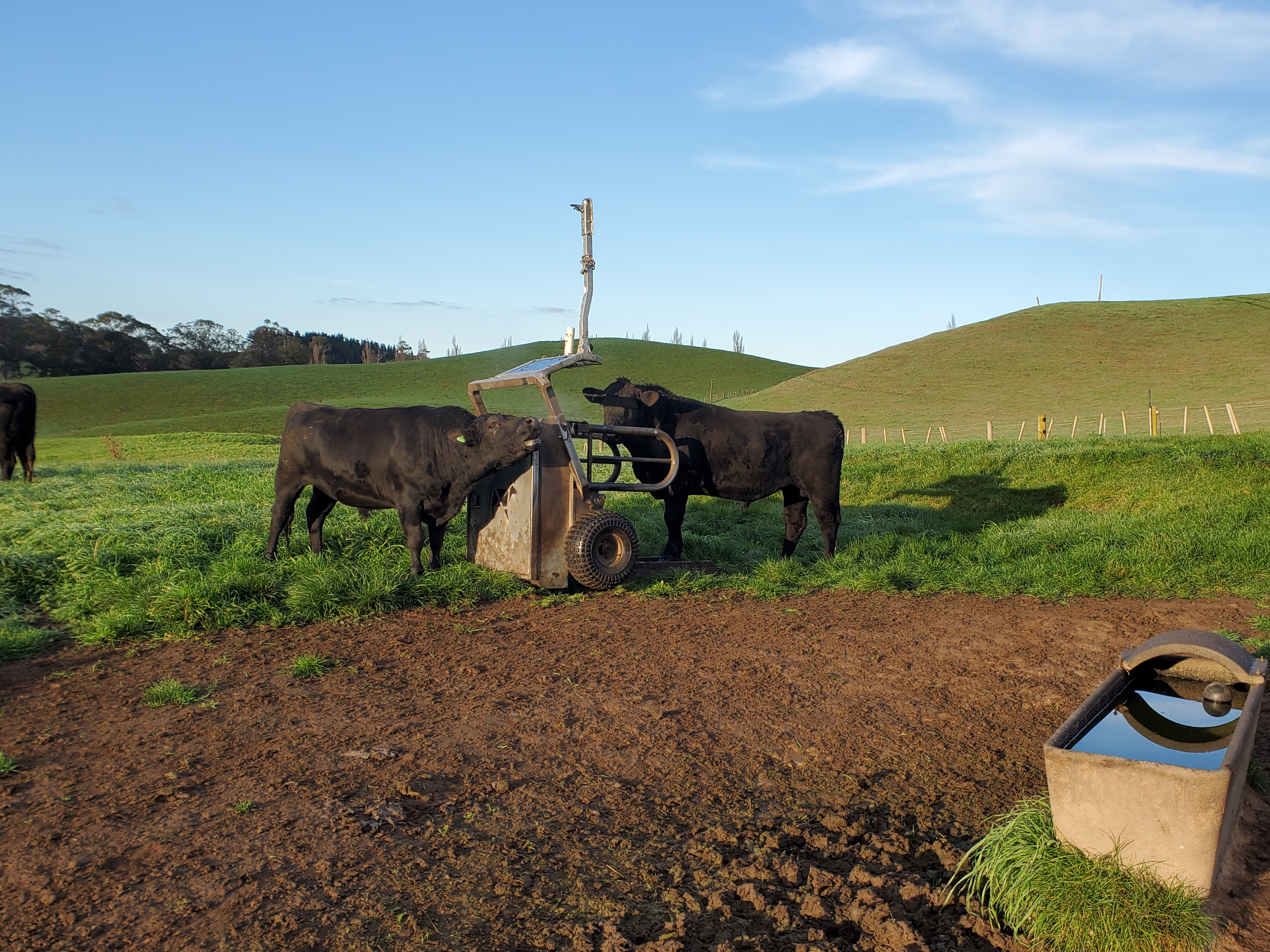
Looking for a way to close that gap, Kieran introduced the StrongBo Auto Weigh unit into his system, not to collect more data, but to get a clearer signal of what was happening in the paddock, day to day. The shift was immediate.
With animals weighing themselves in the paddock, performance trends began to build in real time. It wasn’t about a single weight reading, but the pattern that sat behind it. That’s where the change appeared.
A mob that had been growing at over to a kilo a day suddenly dropped back to around 300 grams. Under a traditional system, that shift may have gone unnoticed for weeks. Instead, it was visible almost as it happened through the Auto Weigh data.
“We had them tracking well, then the growth just fell away,” he says. “That’s not something you want to find out after the fact.”
Because the signal came through early, he was able to act. The mob was brought in, treated, and returned to pasture. Weight gains quickly recovered, tracking back towards expected levels.
What made the difference wasn’t just identifying the issue, it was timing. With only a short window before the animals were due to go to processing, that earlier intervention translated directly into additional production.
Over the following 30 days, the mob gained around 18kg more liveweight per animal than they otherwise would have. In commercial terms, that was worth approximately $90 per head, or around $3,300 across the mob once treatment costs were accounted for.
“In the past, we probably would have just let them go through,” Kieran says. “This time we could see it, make a call, and fix it.”
Beyond the production gain, the presence of that continuous data has changed how the farm operates. With the Auto Weigher providing regular feedback from the paddock, Kieran has greater confidence in how his animals are performing without needing to physically intervene.
That has meant fewer unnecessary yarding events, less disruption to stock, and more targeted use of labour. In one instance, a mob went seven months without needing to be brought into the yards, something that would have been difficult to justify without that level of visibility.
“It gives you confidence to leave them alone when they’re doing what they should be doing,” he says.
Want to hear the full discussion?
Watch the National Fieldays 2026 Tent Talk and hear directly from Kieran and the panel on how the StrongBo Auto Weigher is changing decision-making on farm.