
Fencing the Future: How a Central Otago Homestead Cracked Rotational Grazing
Monday, 17 August, 2026
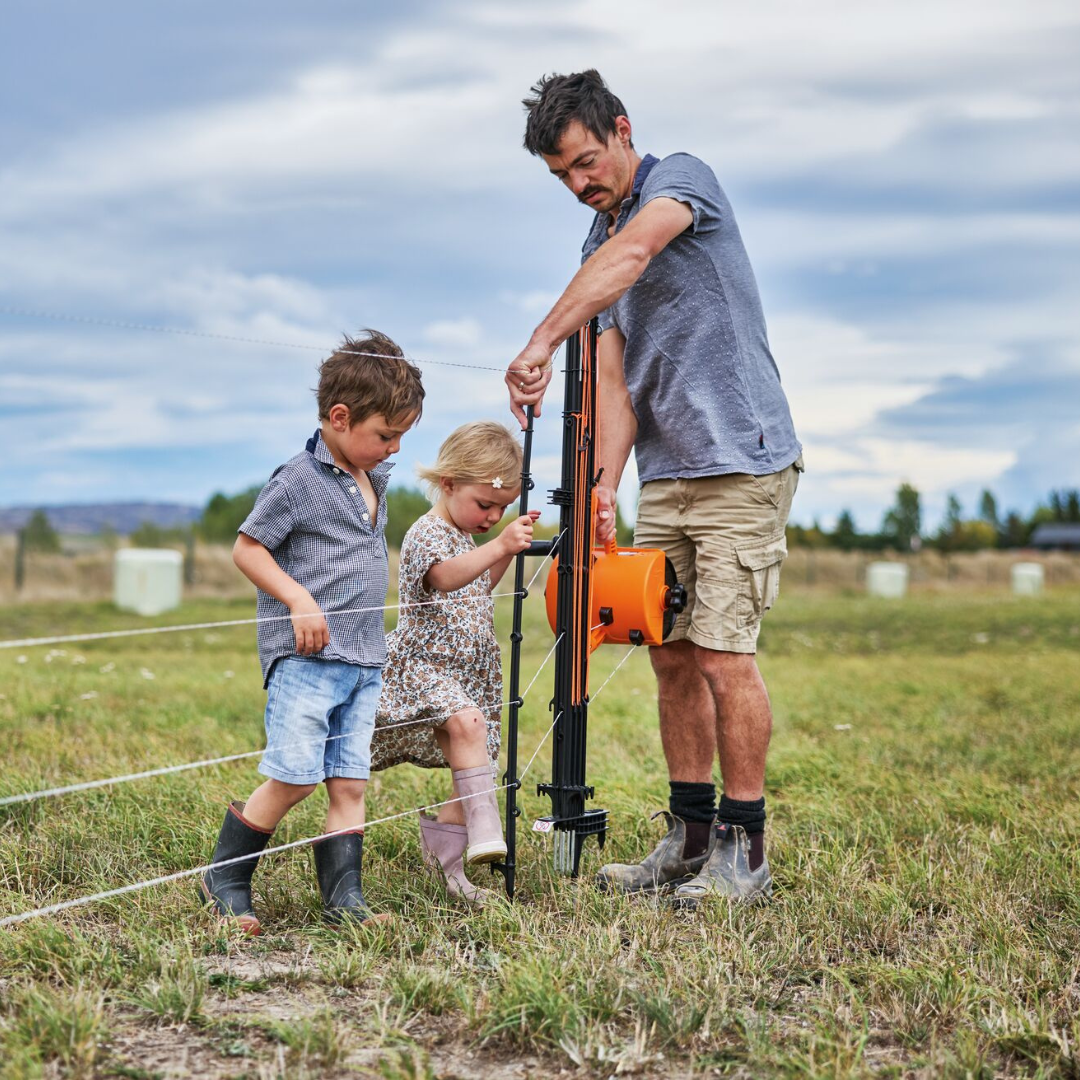
| Abi-Brook Miller | Homestead & Lifestyle Block Owner |
| Lauder | Central Otago |
| Homesteader / Lifestyle Block | 15 sheep (meat & wool), 5 beef cattle, 1 milking cow |
| Optimised | Gallagher Smart Fence (100m x 900mm, 4-wire, portable, connectable to additional units) |
Every spring, Central Otago mum and homesteader Abi-Brook Miller wrangles her sheep for their annual hand shear. It’s a cumbersome process – one that she’s not too keen to reveal. “The sheep are not pretty! It’s definitely not a story to be sheared!” she jokes.
The shearing is not the only process that proves difficult. With two massive paddocks and little fencing on their lifestyle block, she and her partner Dunstan have to spend considerable time following the sheep around trying to bring them in. It doesn’t always go as planned.
“We have stock escaping all the time!” says Abi. “When we have to get them in to do any kind of work it’s a bit of a shit show. Every time, we say something along the lines of ‘this is stupid, next thing we need to do is sort out yards.’ Fencing has been on our list for a couple of years now.”
With 15 sheep for meat and wool, five beef cattle and a milking cow, Abi and Dunstan are able to source much of their own food from their 5.8-hectare property in Lauder. Over the past few years they have gradually become more aware of the importance of infrastructure to manage the animals throughout the year.
Apart from the fence separating the paddocks which they installed a few years ago, the dryland grazing area is bordered by a single electric fence which they later found out was for goats. While that serves to keep the stock contained, it does nothing to control the movement of the animals within the paddocks – or what they consume.
“Other than the stock eating our new plantings, our biggest issue is that we lack the quality and amount of feed required during the stress months (dry summer and frozen winter). This is because we haven’t had the gear to fence the manage how long he stock spend in certain areas.
“We are not over-stocked by any means, we just have two big paddocks that they get loose in, which is not ideal for any kind of pasture control or quality.”
Rotational grazing and soil health
Since they moved to the property five years ago, Abi and Dunstan have gradually developed an interest in improving the health of their soil and animals, and the quality of the food they feed to their family.
Rotational grazing is a key part of this approach. By moving animals onto new areas regularly, they can prevent overgrazing or selective grazing in a particular area, allowing paddocks to rest and grasses to regrow at an optimum rate.
There are multiple benefits to this approach: animals have a greater source (due to fast regrowth) and variety of grass and forage crops throughout the year, saving on the cost of buying in feed.
The other main benefit is to the health of the soil. Since the plants haven’t been overgrazed, they retain their leaves to continue photosynthesising and feeding the microbiology of the soil, which, when nourished, lead to more vigorous and healthy plant growth.
However, to practise rotational grazing there’s one essential component: fencing. The stock needs to be contained in smaller paddocks, or cells, which they graze evenly for short periods, before being shifted to a new cell.
By the time the stock is rotated back to the original cell, the grass should have recovered enough to be regrazed.
Without fencing, the animals will selectively graze the best vegetation, stripping the ground of certain species while leaving large patches of grasses they don’t like.
“More soil life and better recovery for our pasture species is our main aim,” says Abi. “At the moment, they are just grazed, grazed, grazed.
“We’ve sown our bottom paddock with a mix of sub clover, white clover, red clover, chicory, plantain, and cocksfoot grass. The animals have been roaming in paddocks over the past few days and they’ve taken the cream of the crop! All the new growth on the plantain, chicory, and clover has been grazed right down but they’ve left the grass. It’s looking pretty patchy!”
The Smart Fence
Abi and Dunstan have always known they need fencing, but installing hundreds of metres of fixed post-and-wire is not a viable or practical solution. What they need is something mobile that allows them to create new cells on a daily basis, preventing the stock from moving back over ground they’ve already grazed.
When they found the Smart Fence from Gallagher, they knew it would do the job.
A portable, four-wire, all-in-one electric fence, the Smart Fence is perfect for subdividing paddocks as well as protecting trees or baleage from sheep, horses and cattle.
Abi and Dunstan’s model is 100m long and 900mm high, allowing them to create 625 square metre cells for their rotational grazing system. In addition, they can easily connect it to another Smart Fence to increase the grazing area, and it can be electrified by connecting to an existing electric fence or energizer.
“The Smart Fence is so portable and light – I was surprised,” says Abi. “Super easy to pack up hills and put a fence up in one go – not three trips up and down a hill. Perfect.
“I love that it is a four-wire - three for sheep and a higher one for cattle. It’s pretty customisable, too.”
Dustan says the product will be perfect for break-feeding the stock over winter, when grass growth slows right down.
“We want to break-feed the bottom paddock over winter, when we have our hay baleage off to the side. Being able to control what they eat will be a massive win.”
For the couple, it’s a big shift forward in their goals to make their land more healthy, productive, and manageable.
“Now we just need the stock yards!” Abi says.
Take a closer look at Abi's fence setup
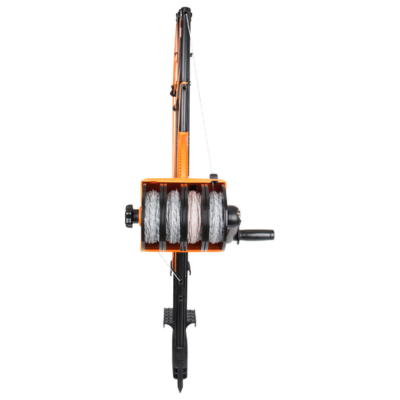
| Smart Fence 2 G70000 |
 |