
Precision Grazing with eShepherd in Alberta's Drylands
Thursday, 27 November, 2025
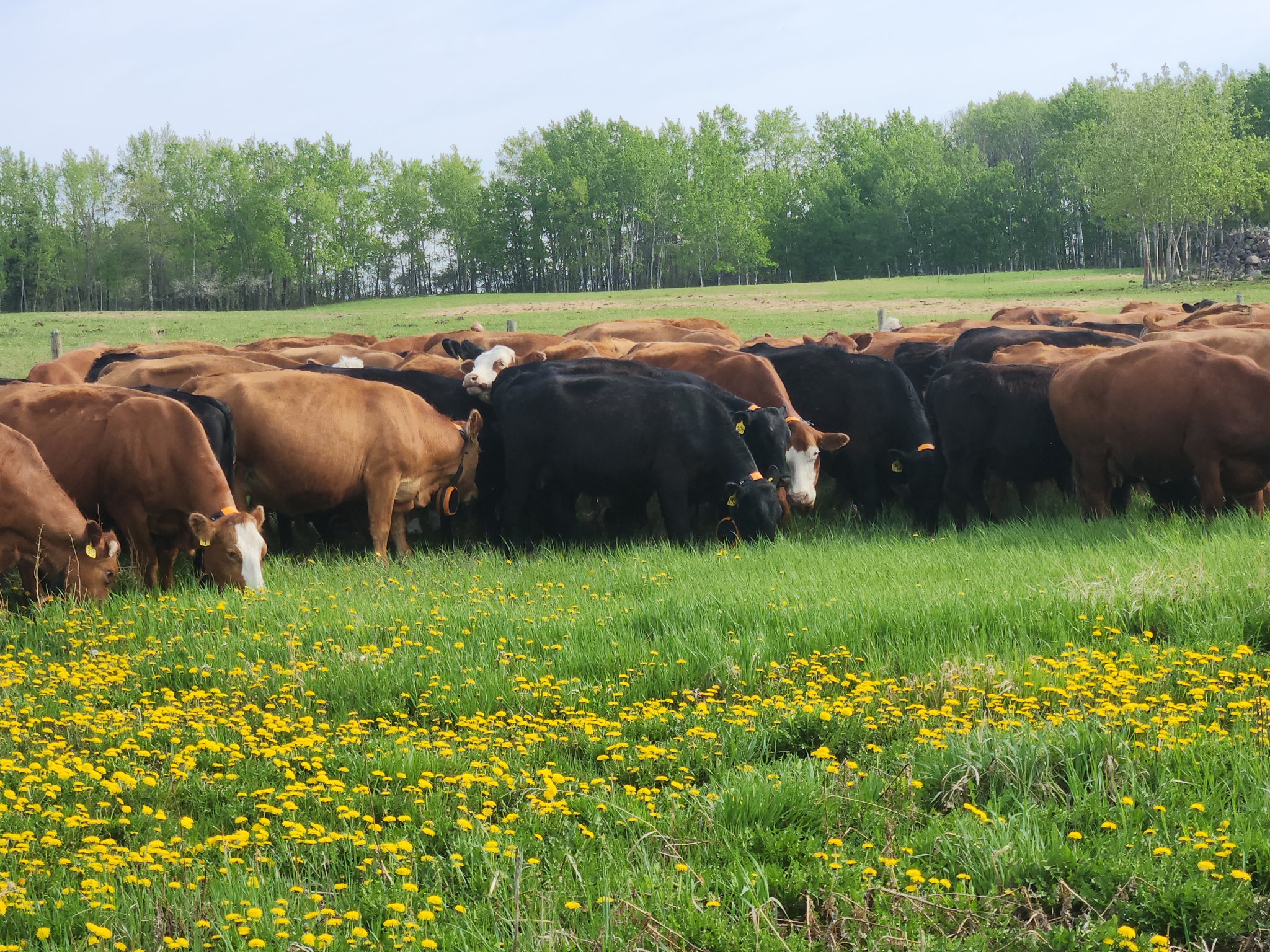
Nick Kunec didn’t grow up on a farm. But when he took over his family’s land in 2017, he brought with him a fresh perspective, and a bold vision for regenerative agriculture.
By 2019, Nick had transitioned to regenerative practices, introducing cover crops and moving toward organic certification. But it was his focus on grazing that truly transformed his operation. “Grazing is probably one of the most important things to have a successful operation,” he says. “Especially in our environment.”
Located in the unpredictable and often challenging climate of Bonnyville, Alberta, where annual rainfall has been under 10 inches for the past five years, Nick Kunec has learned to make every raindrop count.
From Fences to Flexibility
Nick’s introduction to eShepherd started with an internet search. Having heard about virtual fencing, Nick wanted to learn more and reached out to all the suppliers. He liked what the eShepherd team had to offer and decided to take the plunge and invest in virtual fencing.
Using eShepherd virtual fencing, Nick transitioned from labor-intensive electric fencing to a more flexible, precision-based approach, enabling ultra-high-density grazing without the physical barriers.
“It meant I could move four times a day on half-acre paddocks with about 300 animal units,” he explains. “That’s 600,000 to 700,000 pounds per acre. It creates a competitive environment for forage, which encourages the cows to graze more evenly and consume a wider variety of plants.”
Managing Drought with Precision
In a region where rainfall is unpredictable, Nick uses eShepherd to intensify grazing and extend rest periods across the rest of his land, building resilience into his pastures and allowing for natural recovery, even during dry spells. “As you compress your farm into smaller chunks, you increase utilization and rest everywhere else,” he says. “Eventually it will rain, and when it does, those rested areas are ready.”
This approach has allowed Nick to avoid de-stocking during drought years. Something many of his neighbors have had to do. “I’m actually looking to buy more cows,” he says. “It’s not going to work for every animal, but with the right genetics and management, it’s a game-changer.”
Clearing Brush with Cattle Power
Nick’s trials running cattle through wooded areas reflects a growing interest in silvopasture, a regenerative practice that integrates trees, forage, and livestock. In his operation, brush encroachment is a persistent challenge, especially in areas where overgrazing has occurred in the past. Rather than relying on chemical sprays or mechanical clearing, Nick uses his “300 cow power mob” to do the work naturally.
By grazing cattle in dense, brushy zones, he’s able to knock back invasive species, open up the canopy, and allow sunlight to reach the ground creating conditions for grasses and other desirable forage to thrive. “It’s just a pain to try and put an electric fence through that kind of terrain,” he says. “But with eShepherd, I can run strips through the bush and get the impact exactly where I want it. It’s some of the coolest grazing I’ve done.”
He’s seen firsthand how cattle can prune back woody plants, trample down scrub, and deposit manure in areas that rarely see animal impact. “You get sunlight, you get manure, and suddenly there’s opportunity for grass to grow where it never did before,” he explains. “It’s slow, but the potential is unbelievable.”
Adapting the Herd
Training the herd to eShepherd was surprisingly quick. “Less than a day,” Nick says. “They figure it out right away.” Even his “fence-crawler” heifer, known for escaping from at least five wire fences, stayed with the herd all season. Nick says he is also focused on selecting animals that thrive under his system. “It’s not going to work for every cow,” he explains. “Over time, I’m building a herd that’s epigenetically adapted to this way of grazing.”
Nick’s calves don’t wear collars, but that hasn’t been a problem. In fact, it’s become a feature of the system. “They’re creep feeding,” he explains. “They get the best stuff every day.” When they’re young, calves tend to stay close to their mothers, but as they grow, they become more independent. “Now there are calves half a mile away,” Nick laughs. “They’re everywhere.”
Despite the distance, the cows remain calm and contained. Nick estimates his calves are around 400 pounds, born in May and June and look healthy and strong. “Visually, they look great,” he says. “We’ll see what the scale says next month.”
Creative Control and More Time for Life
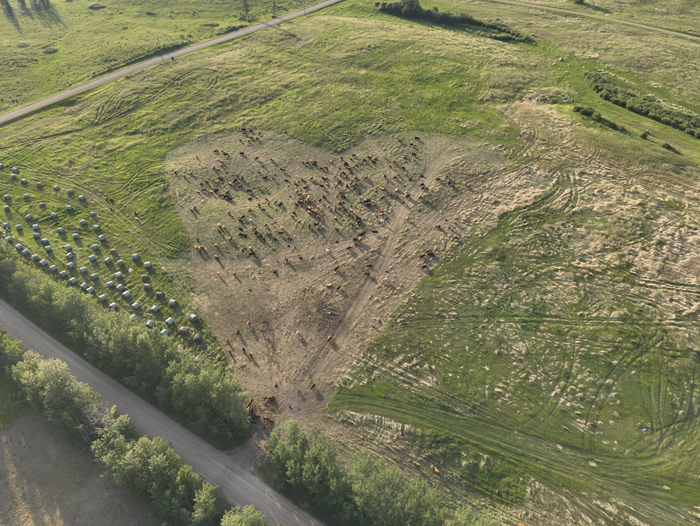
With eShepherd’s web app, Nick can draw paddocks, schedule moves, and even get creative. “I drew a heart in the pasture just to see if it would show up on Google Maps,” he says. “It did.”
The flexibility of virtual fencing has given Nick more freedom to travel and spend time with family by setting up scheduled moves days in advance and trusting the system to keep cattle on fresh forage. “I recently went to Manitoba and Vancouver and just set up eight or nine moves in advance. It was like I never left.”
Looking Ahead
As winter approaches, Nick is eager to test how eShepherd performs in low-light, snowy conditions, especially its potential to enable cattle to access forage beneath the snow in a controlled, efficient way, and potentially reduce the need for bale feeding. “If we can graze all winter, we’d save a fortune,” he says.
For Nick, eShepherd isn’t just a tool, it’s a catalyst for change. “You can use these animals to impact the land in a way that pushes it forward,” he says. “It’s about working with nature, not against it, and that’s the future I want to be part of.”