
Blue Duck Station: Farming for the Future of the Wild
Nestled deep in the Whanganui National Park, Dan Steele and Sandy Waters are proving that farming, conservation, and tourism can thrive together - with a little help from technology.
Thursday, 29 January, 2026
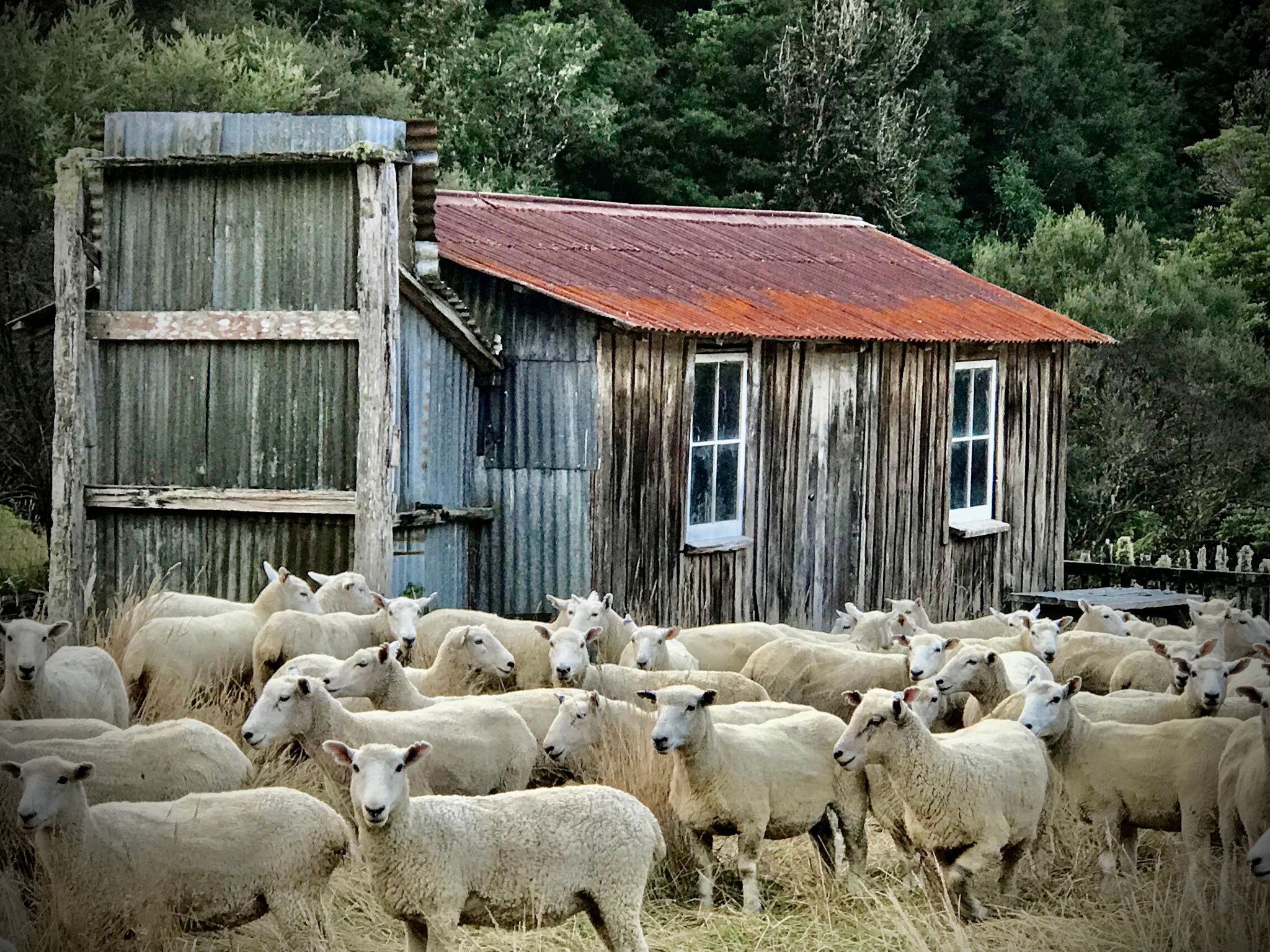
Tucked between the Whanganui and Retaruke Rivers, Blue Duck Station feels like the edge of the world. It’s a place where wild rivers carve through steep gorges and the bush closes in so tight it seems to swallow the hills. But for Dan Steele and his wife Sandy Waters, this isolated corner of the Ruapehu District is home.
Since starting Blue Duck Station in 2005, the couple has built a life and a livelihood that blends farming, tourism, honey, and conservation. Together with their four children, they own 1,400 hectares of steep hill country and also lease neighbouring Retaruke Station from Dan’s parents - a combined operation of just over 2,800 hectares.
The business is a true balancing act: roughly a third of the income comes from farming, another third from tourism, and another from honey, with the rest generated through carbon credits under the New Zealand Emissions Trading Scheme.
Across the property, they run around 4,000 sheep and 500 cattle, farmed in a low-input, humane system that fits the rhythm of the land rather than forcing it.
“It’s a bit of sheep, a bit of beef, a bit of deer, a bit of hunting, bit of honey, bit of tourism, bit of timber and some carbon,” Dan says. “It’s about using every part of the land in the best way possible and leaving it better for the next generation.”
Hard Country. Big Vision.
When Dan first came home, Blue Duck Station was far from the thriving, multifaceted Business it is today. “Calling it a ‘working farm’ would be a bit of a stretch,” he laughs. “Some parts of the Station were pretty rugged and run very extensively. We’ve diversified to take the pressure off the land.”
Piece by piece, he bought up three adjoining blocks - 800 hectares of farmable land surrounded by bush and ridgelines that roll into Whanganui National Park. Farming here, he admits, is hard work: countless river crossings, steep terrain, and more rain than most people would tolerate. But that ruggedness has shaped his philosophy.
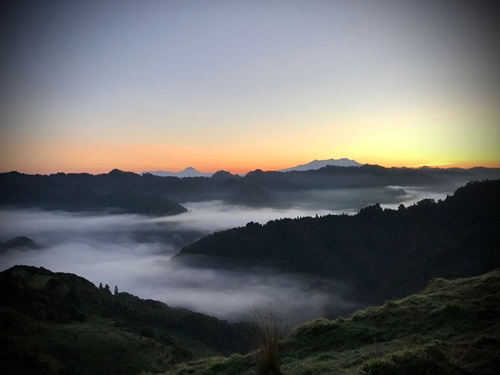
“You can’t force this kind of land into production,” he says. “If you try to farm every inch of it, you’ll destroy what makes it special. So, you find the places that should grow grass, and you let the rest be wild.”
Today, the farm runs sheep, beef, and deer across the easier plateaus and river flats, while vast areas are fenced off for regeneration and conservation. It’s a deliberate balancing act and it underpins every other part of the business.
A Living, Breathing Ecosystem
The name Blue Duck Station comes from the whio, New Zealand’s rare native blue duck. Their presence in the rivers is both the symbol and the reward for decades of conservation work.
Across the station, Dan, Sandy and their team have built and maintained more than 500 predator traps targeting stoats, rats, possums, and feral cats, with help from a rotating team of volunteers they affectionately call their eco-warriors. Many are retired professionals who come for a working holiday, stay in one of the lodges, and spend their days checking traps and resetting lines.
“It’s a bit like Huckleberry Finn,” Dan laughs. “If you show people how beautiful your place is and how much fun it is, you can get them to paint the fence for you!”
Those volunteers form the backbone of the conservation programme, freeing the small team to focus on farm work and tourism. Some of them return year after year. They’re drawn by the camaraderie, the chef’s meals, and the satisfaction of seeing kiwi and whio return to the valleys, the bush thriving, and the dream of kōkako returning one day.
One guest recently messaged Dan after hearing the station had won another environmental award. “It lifted my day,” he wrote. “I felt part of it - even in a small way.”
Moments like that, Dan says, make the long hours worthwhile. “People come here for the scenery and leave feeling connected. That’s when you know it’s working.”
Agritourism as a Bridge
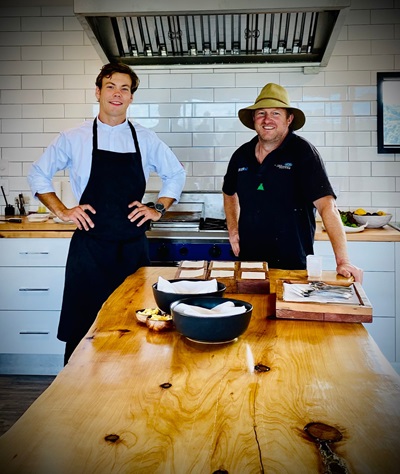
Pictured: Chef's Table Head Chef Jack Cashmore and Dan Steele
Blue Duck Station is now a fully-fledged agritourism destination - a working farm, a conservation project, and an adventure base all in one.
Visitors can stay in rustic lodges, join guided horse treks or hunting trips, kayak down the Whanganui River, or dine at The Chef’s Table, the station’s extraordinary ridgetop Restaurant.
Run by a small culinary team, the restaurant overlooks the valleys below and serves a set-menu experience built around ingredients from the land. There’s venison, honey, native herbs, and vegetables grown by Dan’s 80-year-old aunt in the garden below. It’s not uncommon for guests to fly in from the United States or Europe for dinner, watch the sun dip behind the mountains, and then spend the next morning helping check traps or plant trees.
“Agritourism is a bridge,” Dan says. “It helps people understand that farming and conservation aren’t opposites, but rather they’re part of the same story.”
The Chef’s Table and café employ locals and bring valuable income into the district, proving that rural diversification is about resilience as well as community. Around 26 people now live on the station, from family and staff to young families raising their kids among the hills.
“It’s our own little village,” Dan says proudly.
Technology That Enables Coexistence
Among the steep gullies and regenerating forest, Dan’s conservation plans depend on reliable, resilient infrastructure. It’s here where technology plays a crucial role.
Blue Duck Station is now working with Gallagher to trial new fencing and power systems that protect young forests and waterways. Using a Geared Reel, S80 Li Energizer, and soon the Insulated Line Post (ILP) system, Dan is creating flexible, low-impact fencing around wetlands and reforestation areas.
These barriers keep livestock and deer out while allowing native vegetation to recover. They are vital for filtering water and providing safe habitat for native birds.
“If we’re going to farm here responsibly, we need technology that helps us look after the environment, not just the stock,” he says.
The Bigger Picture
Dan and Sandy are passionate about changing how New Zealanders think about farming. They believe the country’s future lies in adding value, not selling volume.
“We can’t keep producing commodities and expect to compete globally,” Dan says. “Our future has to be about showing the world that we care about this place, and that everything we produce supports conservation.”
He often talks about the idea of natural capital. “Every New Zealander is a shareholder in this country,” he says. “Every time we restore a wetland or bring back native birds, we increase that value for everyone.”
It’s a message he and Sandy share at community events, in conservation think-tanks, and with visiting school groups. Their four children are growing up with that same mindset - that working the land also means protecting it.
“If we want our kids to farm here one day, we need to make sure there’s something left to hand on,” Dan says.
Looking Ahead
There’s always another project on the horizon at Blue Duck. The team is partnering with Goodnature to develop new traplines, expanding The Chef’s Table to host more guests, and working toward becoming an official Save the Kiwi release site.
Longer-term, Dan and Sandy dream of reintroducing kākā and kōkako to the valleys - species that vanished from the area a century ago.
“Every day’s a school day,” Dan says. “We’re not experts. We’re just learning as we go, alongside the land.”
For a place that was once considered unfarmable, Blue Duck Station has become a blueprint for the future of farming. It is a living example of how diversification, conservation, and technology can work together to create something far richer than profit - a legacy.