
Preparing for Rotational Grazing Season: Balance Builds Resilience
Tuesday, 09 June, 2026
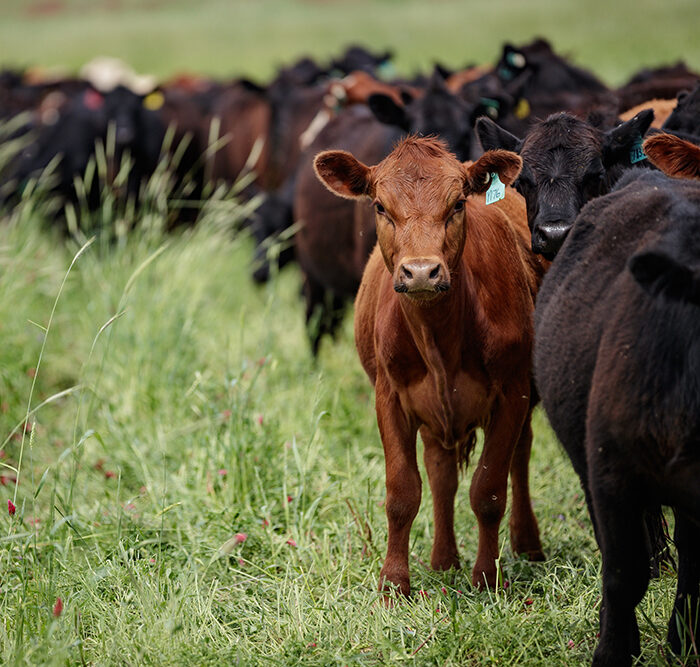
June is when a grazing plan starts to prove itself. Spring growth may still be strong in many regions, but heat, water demand, forage maturity, and fence pressure can change quickly. The operations that stay ahead are usually not the ones with the most complicated systems. They are the ones that build balance into the plan before the first real summer stress test arrives.
That balance starts with three connected pieces: healthy soil, reliable water, and low-stress livestock movement. When those pieces work together, cattle can support intake, pastures get the recovery time they need, and managers have a clearer picture of whether the system is improving performance.
Rotational Grazing Is Won Before the First Move
A good grazing plan is not just a fence layout. It is a decision-making system.
The goal is to match animal demand with forage supply while protecting plant recovery, soil cover, water access, and animal performance. USDA NRCS prescribed grazing guidance emphasizes planned grazing periods, recovery time, adequate livestock water, contingency planning, and monitoring as part of a complete grazing system.
That matters in June because forage growth, water demand, and heat stress risk are all moving targets. Cool-season grasses often produce heavily in spring and then slow as summer heat arrives, while warm-season grasses perform best under warmer midsummer conditions.
The practical takeaway is simple: do not wait until the pasture looks short, the tank runs dry, or the fence goes weak to adjust the plan. Build the system so you can see problems early and respond quickly.
1. Start with Water: Resilience Begins Below the Surface
Water should be the first question in any rotational grazing plan.
Cattle use forage best when water is reliable, easy to reach, and consistently available. In rotational grazing, that means each paddock needs a practical water plan before cattle enter. Guidance from the University of Kentucky recommends keeping water within 800 feet when possible. When cattle drink as a group, 5% to 15% of the herd should be able to drink at once, with about 20 inches of space per head on circular tanks and 30 inches per head on straight tanks.
Water management is not just about daily volume. It is about meeting peak demand. On hot days, cattle often arrive in groups and drink heavily, which can quickly reveal problems with tank size, refill rate, pipe diameter, or pump capacity. Missouri Extension notes that tank volume and refill rate should match herd demand and distance to water, especially when livestock must travel farther to drink.
For June planning, ask:
- Can cattle reach water without excessive walking?
- Is the tank large enough for group drinking behavior?
- Can the system refill fast enough during peak demand?
- Is there a backup if the pump, float, pipeline, or power source fails?
- Can remote tank levels be monitored before water becomes a crisis?
Technology can strengthen management in this area. Gallagher Tank Level Monitoring and other connected-farm tools can help producers keep track of critical infrastructure, especially at remote tanks or locations checked less often. The goal is not to replace good grazing management, but to shorten the time between the start of a problem and the manager becoming aware of it.
2. Build Fence Readiness: Control Creates Flexibility
Rotational grazing depends on control. Without a dependable fence system, even the best forage plan can fall apart.
Before summer pressure builds, inspect the system. Check braces, posts, gates, insulators, wire tension, vegetation load, connections, grounding, and energizer performance. A fence that was good enough in spring may not hold up once grass touches the wire, soil dries out, or cattle begin testing boundaries.
Gallagher recommends maintaining 5,000 to 7,000 volts on electric fences for cattle and using a voltmeter to test the fence rather than guessing by feel. That habit matters because electric fencing is a psychological barrier: cattle respect it when the shock is consistent.
A good June fence check should include:
- Test voltage at the energizer.
- Test voltage at the far end of the fence.
- Check grounding under real field conditions.
- Remove vegetation load where needed.
- Inspect all underground gate crossings and lead-out connections.
- Make sure temporary fence supplies are ready before the first move.
Gallagher supports this part of the system with energizers, grounding equipment, fault finders, voltmeters, permanent fence components, portable posts, geared reels, and high-conductivity portable wire. For larger or more complex setups, Gallagher iSeries fence monitoring can help producers track fence performance, receive alerts, and manage compatible systems through connected devices. The Gallagher Devices App also lets users view fence status, receive fault alerts, and monitor performance from a phone.
The main value is labor efficiency. If producers can spot a voltage drop before cattle find it, they gain more control over livestock movement and their time.
3. Move with Less Stress: Flexibility Supports Better Grazing
Rotational grazing should make livestock easier to manage, not harder.
Low-stress grazing starts with predictable movement. Cattle learn the routine and expect fresh feed. They move through gates and lanes with less pressure when fence placement, water access, and paddock size are well planned.
Temporary fencing is a key part of that flexibility. Gallagher Ring Top Posts are designed for portable electric fencing and work well in rotational and strip-grazing systems. Paired with geared reels and solar lithium energizers, they can make grazing moves easier to manage.
Portable fences let producers adjust paddock size as forage conditions change. That matters because June forage can be misleading: a paddock may look lush, but usable forage depends on the dry matter available above the residual height that must remain.
A simple paddock-sizing mindset looks like this:
Animal demand × number of animals × grazing days ÷ usable forage per acre = paddock size
To estimate dry matter intake, multiply herd size by expected intake per animal and by days in the paddock, then divide by grazable dry matter per acre.
For example, if 60 cow-calf pairs need roughly 39 pounds of dry matter per pair per day, and the pasture has 1,200 pounds of usable dry matter per acre above the desired residual, a one-day paddock would be about:
60 × 39 ÷ 1,200 = 1.95 acres
This is not a fixed prescription. It is a way to size paddocks based on conditions. The number will change with animal size, forage density, pasture condition, utilization goals, and weather.
4. Measure Pasture Before You Move
A grazing plan should protect the next rotation, not just feed the current one.
Residual matters. If cattle graze too close, plants lose leaf area, recovery slows, roots are stressed, and the next rotation weakens. If paddocks are too large, cattle become more selective, forage matures, and utilization drops. If paddocks are too small or rest periods are too short, both pasture resilience and animal performance can suffer.
The better question is not, “Is there grass in the paddock?”
The better question is, “How much usable forage is available, how long should cattle stay, and how much residual must remain?”
NRCS guidance emphasizes matching grazing and recovery periods to plant growth and resource conditions. That is especially important in June, when moisture and temperature can quickly change recovery rates.
A practical pasture check should include:
- Pre-graze height
- Desired post-graze residual
- Estimated forage density
- Number of grazing days planned
- Expected recovery period
- Rainfall and heat outlook
- Animal behavior and intake signals
Tracking these details makes the grazing plan more adaptive and improves conversations about animal performance. If weight gain, body condition, or milk production begins to slip, the records can help identify whether the cause is forage quality, water access, paddock size, heat stress, parasite pressure, or another management factor.
5. Link Soil Health to Animal Performance
Soil health and animal performance are often discussed separately, but in a grazing system they are linked every day.
Healthy soil supports stronger forage growth, better water infiltration, more resilient root systems, and faster recovery after grazing. Better forage supports intake and nutrition, while reliable water supports feed intake and temperature regulation. Together, these factors shape animal performance.
The challenge is that performance can be hard to judge in real time. A pasture may look productive while cattle gain less than expected, or cattle may seem settled while forage quality is declining. Better measurement helps close that gap.
Automated weighing can give producers a clearer view of animal performance without the labor and stress of frequent chute weighing. Gallagher’s Auto Weigher is designed to let animals weigh themselves and send herd performance data to a phone or computer, helping producers track more information with less disruption.
That matters because good grazing decisions should show up in livestock results, not just pasture appearance.
The June Grazing Readiness Checklist
Before summer pressure builds, review the system one step at a time:
| Readiness area | What to check | Why it matters |
|---|---|---|
| Water access | Distance, tank size, refill rate, backup plan | Intake and performance depend on reliable water |
| Fence voltage | Energizer output, far-end voltage, vegetation load | Cattle respect consistency |
| Grounding | Rod condition, spacing, soil moisture, connections | Poor grounding is a common cause of weak fence performance |
| Temporary fence gear | Posts, reels, handles, wire, testers, repair supplies | Fast moves require ready tools |
| Forage supply | Pre-graze height, residual target, usable dry matter | Paddock size should follow forage availability |
| Recovery period | Rest days by pasture type and weather | Plants need time to rebuild leaf and root reserves |
| Animal movement | Gate placement, lane flow, water location | Low-stress movement improves handling and consistency |
| Monitoring | Grazing records, voltage checks, water status, weights | Better records create better decisions |
| Contingency plan | Drought trigger, sacrifice area, hay plan, stocking flexibility | Resilience requires decisions before the crisis |
grazing system that stays flexible, reliable, and easier to manage under pressure.
Balance Is the System
Rotational grazing is not about moving cattle for its own sake. It is about keeping forage, water, fencing, soil, and animal performance in balance.
That balance takes planning: securing water before cattle need it, testing fences before animals test them, sizing paddocks before forage is overgrazed, and tracking performance before problems become costly.
June is the time to tighten the system. Producers who build resilience now will be better prepared for the season ahead.
Ray Willians, Product Education Manager