
Fresh thinking shapes rotational grazing at Kummer Homestead
Thursday, 12 November, 2026
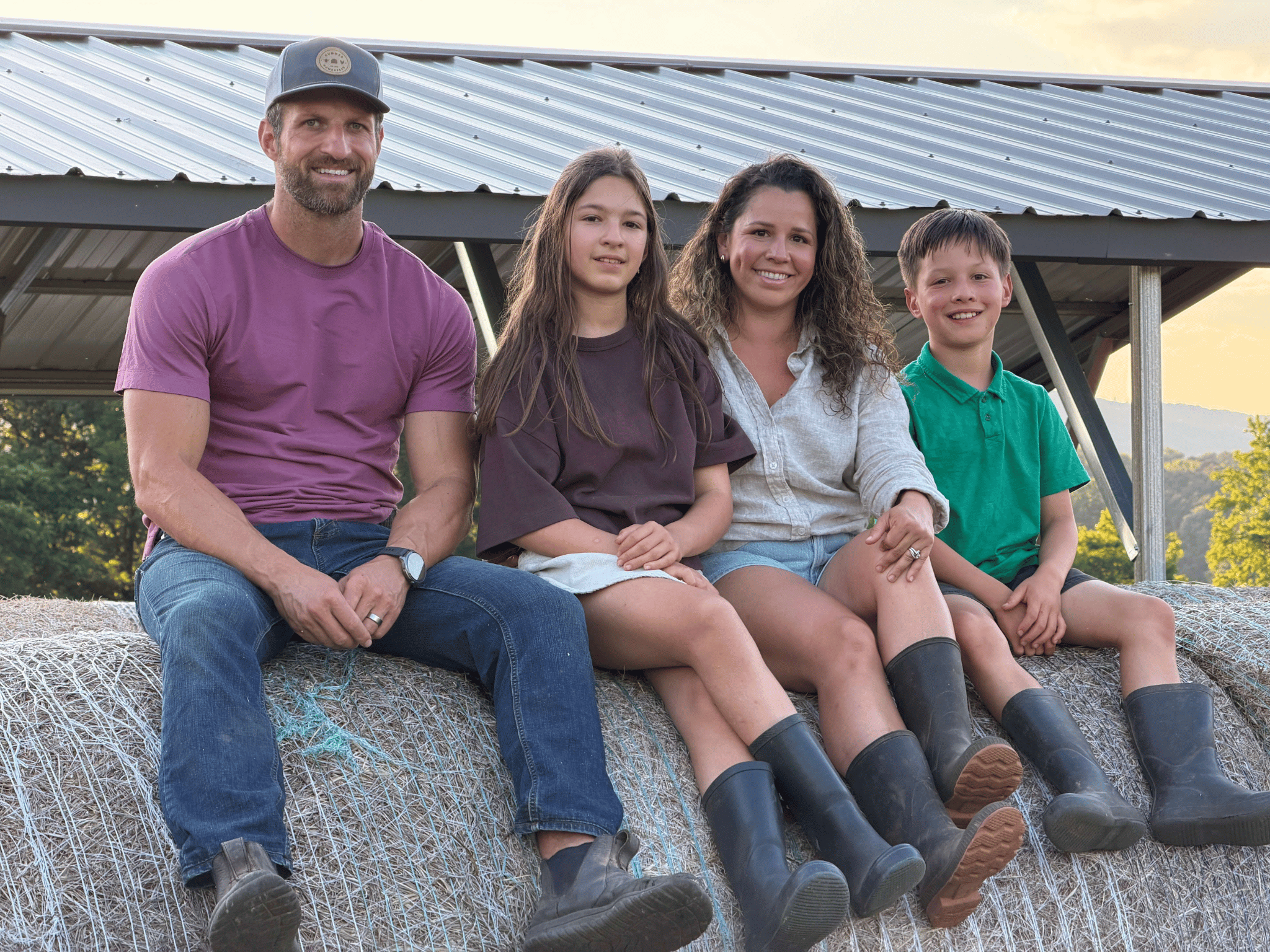
Michael Kummer is bringing a fresh perspective to rotational grazing at his family’s homestead in Georgia.
Although relatively new to raising cattle, Michael has embraced the challenge with enthusiasm, researching different approaches, trying new ideas and learning from the way the land and animals respond.
Behind it all is a desire he shares with his wife, Kathy, to take greater responsibility for their family’s food and health.
“Along the way, we realised that food is such an important aspect of living well that you don’t want to outsource it to someone who doesn’t care about your health as much as you do,” Michael says.
“There is so much done to traditional food products from the time they leave the farm to the time they end up on your table. We decided we wanted to take control of our family’s food supply.”
They are putting that belief into practice on their 45-acre homestead in northwest Georgia, caring for the soil, raising animals well and knowing what happens between pasture and plate.
Michael hosts The Primal Shift podcast and, with Kathy, runs MK Supplements. Seven years ago, however, the former IT security specialist would have laughed at the idea of becoming preoccupied with soil tests, pasture recovery and moving cattle. Without a conventional farming background, he has researched, experimented and found his own approach.
Originally from Austria, Michael moved to the United States in 2007. Kathy is from Costa Rica. They now share the homestead with their children and German shepherd, Ribeye.
Taking responsibility for their food
 The Kummers began raising poultry, rabbits and honeybees on a 1.26-acre property in Fulton County. Michael’s 93-year-old grandmother, whose family kept animals in Austria, still laughs at his new direction.
“Never would anyone have expected that I would circle back to where she came from,” he says. “It still gives her the giggles.”
Although Michael is new to cattle, he is not new to managing animals or using regular moves and rest periods to improve the ground.
“We saw dramatic improvements in soil quality and forage diversity on our old property with the chickens,” he says. “We turned what was basically a Bermuda grass lawn into pasture in just a couple of years, where everything was growing, insects were coming back and all of those good things.”
With little room to keep moving the poultry, the family began looking for more land. They found 45 acres of former hay country in Chattooga county with just eight trees.
“I thought the more grass the better,” Michael says. “It turns out animals prefer shade as well, especially in summer.”
They brought cattle onto the land in March 2026 and now have seven Black Angus and South Poll cattle.
Farming from the soil up
Michael took a methodical approach, studying pasture management, grass and soil health before the cattle arrived, then developing a system he could adjust as he learnt. Without fixed ideas about how things should be done, he was willing to try new approaches and see how the land and cattle responded.
Rotational grazing could help the family use grass efficiently while giving the land time to recover. It is also part of a chain that affects the food they eat.
“The eye-opener was the first couple of soil tests,” he says. “If certain nutrients aren’t in the soil, they’re not going to be in the meat. Whatever we do, we need to improve the soil, so the downstream products become better and ultimately, we become healthier at the end of that chain.”
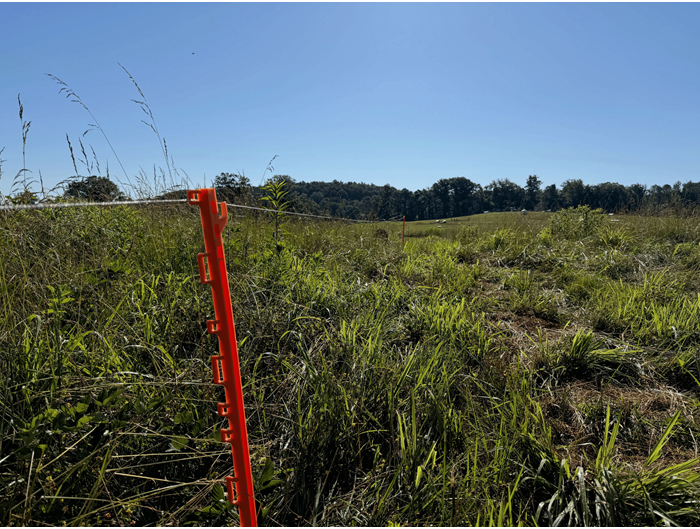
Michael divided three grazing areas into lanes and used portable cross-fencing to create daily paddocks, giving each area around 30 days or more to recover. He did not want to lock himself into a fixed layout while he was still learning how the herd and pasture would respond.
A flexible system for daily moves
“Cattle aren’t gentle with that stuff, so it needs to hold up,” Michael says. “I’d rather buy once and know the gear is going to last rather than repurchasing things over and over because they break. That quality was one of the reasons we chose Gallagher.” The portable fencing allows Michael to alter the grazing areas as conditions change and refine the system before installing more permanent infrastructure. Each move takes about 30 minutes. Michael opens the next break, pulls through the mobile shade and shifts the mineral feeder and water trough. The cattle are usually waiting for fresh forage. “Without the plan and the fencing, it would be a lot of work and frustration,” he says. “Now I go down in the morning or evening, open the fence and pull the shade structure through. The cows know exactly what to do. I move everything behind them, close the fence, set up the next day’s paddock and I’m done.”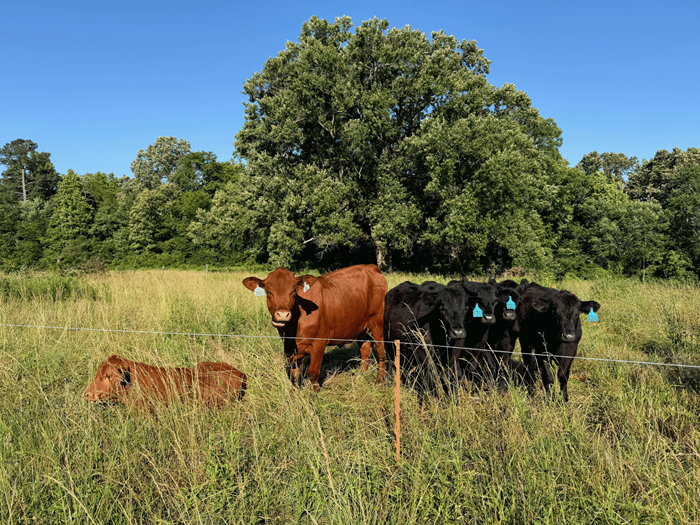 The family uses Gallagher polywire, reels and orange step-in posts for the portable interior fencing, powered in the field by two S80 solar energizers. An M30 mains-powered energizer powers another area, while high-tensile wire and Gallagher Insulated Line Posts form a permanent framework along the northern boundary.
Learning from the land
Their first season has involved watching how quickly the fescue grows, working out how much pasture to offer and adapting as conditions change. Michael is careful not to claim long-term results yet. He remains curious, learning from each move and looking for even grazing, healthy regrowth and opportunities to improve. The cattle are one part of the wider homestead that includes poultry, rabbits, pigs, turkeys and guinea fowl, which are managed separately. The kids help care for the animals and learn where their food comes from. For Michael, one of the most rewarding parts is having hooves back on land that had been cut for hay and may not have carried animals for a decade. “It’s the feeling of having hooves on the ground. That’s what the ground needs and what the soil needs,” he says. “Knowing I can participate in improving that soil for our own benefit, but also for the benefit of the next generation and the planet, is a beautiful thing to do.” Next, the Kummers plan to expand the herd and refine their grazing system, producing more of their food while improving the land that supports it.