
Growing Better Beef from the Ground Up
At Black Pond Farm in North Waikato, Robyn Budd and Hamish Browne are showing how careful grazing, organic beef production and a deep respect for natural systems can help a working farm become healthier over time.
Monday, 13 July, 2026
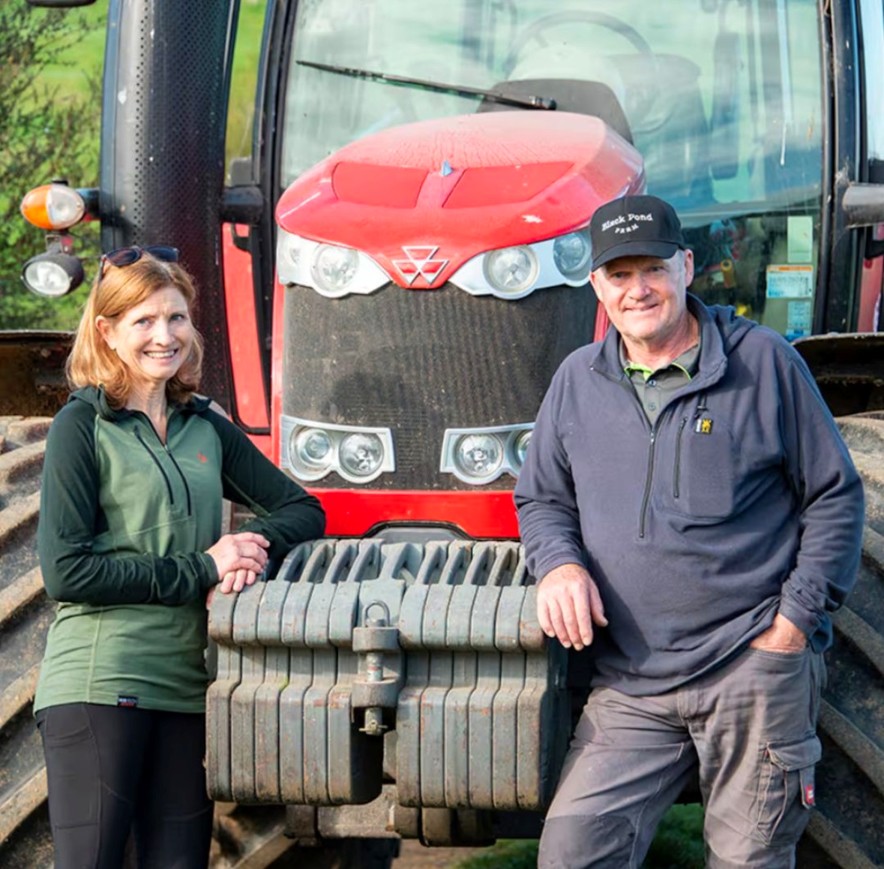
For Robyn Budd and Hamish Browne, Black Pond Farm is the result of years spent working toward a life on the land.
Hamish had wanted to farm since he was young but worked in mechanical and engineering roles before farm ownership became possible. Robyn came to farming after a career in advertising and business, bringing the communication and people skills that now help shape the Black Pond Farm brand.
Today, the couple farms 106 hectares at Mangatangi in the northern Waikato, producing certified organic beef in a system that reflects how they want to care for the land, their animals and the people who eat their food.
“We farm by our own philosophy,” says Robyn. “We know every farm chooses a different approach, but for us this is our philosophy and it feels good.”
That philosophy is about paying attention, working with natural systems and making choices that leave the farm stronger over time.
“We’re just going back to the basics, really,” says Robyn. “You are what you eat, so make what you eat the best it can be.”
Hamish sees it as a cycle. Healthy soil grows better pasture. Better pasture grows healthier animals. Healthier animals produce better food. All of it depends on giving the land the chance to do what it is naturally built to do.
“Leaving the place better than we found it is about working with what the land needs, rather than simply adding more to it. We don’t want to get into a cycle that eventually makes it uneconomical for the next generation,” he says. “We’ve always tried to work with nature, not against it.”
A closed organic beef system
Black Pond Farm runs a closed organic beef system, with cattle numbers lifting to around 150 head at peak. Robyn and Hamish breed and finish their own animals, using their own bulls and breeding cows, with everything born and raised on the farm.
The herd is built around Shorthorn genetics, chosen for temperament, marbling and suitability to the farm’s soils. Their calves stay with their mothers until they naturally wean.
Keeping the system small-scale helps Robyn and Hamish understand which cows are thriving, which calves are growing well, how pasture is recovering and where the farm needs more care. Some cattle even have names, usually because of a distinct look or personality.
A farm slowly coming alive
Robyn and Hamish arrived at Black Pond Farm in December 2017. Since then, the changes have been gradual but deeply rewarding.
The streams are clearer. The soil has more life. Trees are starting to reshape the landscape. Wildlife is returning.
“The streams have really cleaned up,” says Hamish. “Even though we’re in a muddy-bottom system, we’ve got rocky, stony bottoms in our creeks now. The soil was pretty dead when we started. Now, the life in the soil is improving year by year. That’s where it all starts from.”
Thirty hectares of the farm is protected in QEII-covenanted native bush. Robyn and Hamish have also fenced gullies, protected waterways and planted trees to create shade, filter runoff and improve habitat.
The work is beginning to show. Freshwater monitoring has found kōura, New Zealand freshwater crayfish, in the streams. Long-tail bat monitors have confirmed native bats are present, and ponds created for tuna, or freshwater eels, are now providing valuable habitat.
Across the wider farm, areas that were once open and exposed are becoming more diverse. Trees are softening fence lines, shelter belts are beginning to take shape, and protected areas are creating corridors for wildlife.
Poplar trees are commonly planted on New Zealand farms for shade, shelter and erosion control. At Black Pond Farm, Robyn and Hamish have double-fenced areas along the main north-south fence lines and planted poplars at 20-metre spacings. Over time, the trees will provide shade and shelter for stock while bringing more structure and diversity to the farm.
Grazing with recovery in mind
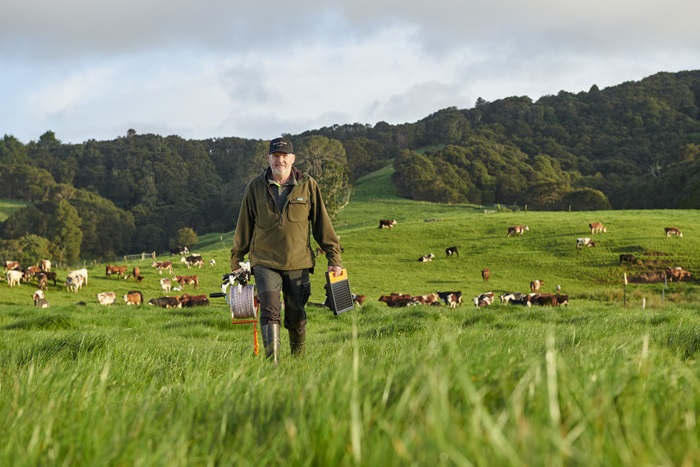 At the heart of the farm system is rotational grazing. Robyn and Hamish move cattle regularly through the farm, managing pasture in a way that gives plants time to recover and roots time to strengthen.
Their principle is simple: graze the pasture, then give it enough time to recover.
“Taking the first short regrowth too soon weakens the plant and stops the pasture reaching its full potential,” says Hamish.
Their paddocks are relatively large, so temporary fencing allows them to adjust each break depending on the season, growth rates and animal needs. In a strong growing season, they can tighten the breaks. At other times, they can give cattle more space.
“We use Gallagher gear for break feeding and pasture management, which helps us adjust grazing areas as conditions change,” says Hamish. “It’s the kind of equipment that needs to stand the test of time, which Gallagher certainly does.”
Fencing also helps protect sensitive parts of the farm.
“We’ve fenced all our gullies off where the water would shed off the paddock,” says Hamish. “We’re trying to protect the waterways and remove as much silt or anything that’s going to come off that land before it actually gets into the waterways.”
The art and science of farming well
While Black Pond Farm is built on observation and practical farming skill, Robyn and Hamish also use tools and data to support their decisions.
They weigh cattle when selecting animals for finishing, but the final call still comes down to experience and Hamish’s eye for stock.
“It’s a combination of art and science,” says Robyn. “The science is the weight. That’s the starting point. Then how do we choose the animals based on their condition?”
For Hamish, technology has its place, but it cannot replace what farmers learn by being present on the land.
“It’s amazing what you learn by just walking around, stopping and looking,” he says.
Food with a story behind it
Robyn and Hamish have chosen to take their organic beef to market themselves, selling through selected retailers and directly to customers who care about how their food is produced.
The end product carries the whole story of the farm: the soil, the pasture, the cattle, the organic system and the choices made along the way.
After putting so much effort into becoming certified organic, Robyn says it felt wrong for the meat to disappear into a system where that care and detail would be lost.
“We realised that it would be a waste for us to put all that effort into growing these animals if we didn’t get them to people who valued the way they had been raised,” she says.
Their beef is processed into a range of cuts and products, including steaks, mince, sausages, salamis and beef sticks.
“We wanted the final product to be as pure as the meat that we had grown,” says Robyn.
Many customers buy Black Pond Farm beef because they connect with that story. Robyn says people increasingly want to know where their food comes from, how it has been raised and what they are feeding their families.
“We hope people can taste the care in every bite,” says Hamish.
A farm still evolving
When Robyn and Hamish look ahead, they know Black Pond Farm is still evolving.
They want more birds, more bush, healthier soils and a landscape that continues to become richer and more resilient. The Hunua Ranges are not far away, and Hamish hopes that as habitat improves, more native birds will make their way back.
“We’re starting to coax them back and starting to see more of our native tūī around.”
For Robyn and Hamish, leaving the land in better shape can be measured through clearer streams, deeper-rooted pasture, healthier cattle, more shade, more birds and soil that is slowly coming back to life.
Black Pond Farm is a strong example of farming for the future. Robyn and Hamish don’t claim to have perfected the model, but they are prepared to keep observing, adapting and doing the work.