
In the aftermath of devastating wildfires, ranchers face significant challenges in restoring their land and managing livestock effectively. Wildfires often destroy not only vegetation but also miles of traditional fencing, leaving landowners scrambling for solutions to protect recovering areas while maintaining grazing efficiency. Virtual fencing technology, such as eShepherd, has become a revolutionary tool for ranchers navigating these difficult circumstances.
Virtual fencing offers numerous advantages to ranchers as they rebuild after a wildfire:
- Protects Vulnerable Areas: Virtual fencing helps keep livestock out of damaged or regenerating areas, allowing vegetation to recover naturally.
- Reduces Costs: With no need to rebuild or repair physical fences, ranchers save both time and money during the recovery process.
- Supports Erosion Control: By preventing grazing in fire-affected areas, virtual fencing protects fragile soil from erosion.
- Enables Dynamic Management: Ranchers can adjust grazing boundaries as vegetation regrows, making it easier to adapt to changing conditions.
- Promotes Sustainability: Virtual fencing prevents overgrazing, supports biodiversity, and contributes to long-term land health.
- Streamlines Operations: By replacing physical fences with easily adjustable digital boundaries, livestock management becomes more efficient.
- Improves Disaster Resilience: Virtual fencing provides ranchers with a flexible and future-ready tool to cope with the increasing risks of wildfires.
- Enhances Livestock Health: Animals graze in safer, carefully managed zones, reducing stress and promoting well-being.
Environmental Recovery Through Technology
Wildfires leave the land vulnerable to erosion, invasive species, and the loss of vital soil nutrients. Virtual fencing allows ranchers to protect these fragile areas while they recover, encouraging the regrowth of native plants and stabilizing the soil. This contributes to water retention and helps restore the natural biodiversity of the land.
By leveraging this innovative technology, ranchers are not only protecting the environment but also ensuring the future viability of their operations. Virtual fencing allows for precise grazing management, giving ranchers greater control over the recovery process while maintaining their livestock's needs.
Adaptability for a Changing Climate
As wildfires grow in frequency and intensity due to climate change, ranchers need flexible, cost-effective tools to sustain their operations. eShepherd’s virtual fencing system offers a forward-thinking solution that aligns with the realities of modern agriculture. Its adaptability and ease of use make it an essential tool for rebuilding after wildfires and preparing for future challenges.
Shaping the Future of Ranching
The adoption of virtual fencing after wildfires marks a significant evolution in livestock management. Beyond aiding in disaster recovery, tools like eShepherd empower ranchers to operate more sustainably and efficiently. By embracing this technology, ranchers are rebuilding stronger and contributing to broader environmental resilience.
Virtual fencing is not just a recovery tool—it’s the cornerstone of modern ranching in an era of increasing environmental challenges.
In the wide-open plains of South Dakota, a quiet revolution is taking place. At Jorgenson Landing Cattle, CEO Nick Jorgenson is leading the charge by implementing cutting-edge virtual fencing technology to tackle one of modern ranching’s biggest logistical challenges: managing large herds across vast expanses of land without exhausting manpower or infrastructure.
Spanning 13,000 acres and home to 1,500 Angus females, the ranch faced steep demands with traditional rotational grazing methods. Moving cattle with physical fencing was not only labor-intensive but also inefficient. That’s where the Gallagher eShepherd™ virtual fencing system entered the picture — offering a smart, scalable solution that’s already paying dividends.
A New Age of Grazing
By adopting virtual fencing, Jorgenson's team significantly cut down the need for permanent fencing and physical labor. The system uses GPS-enabled neckbands to set virtual boundaries, allowing cattle to be moved or contained using nothing but a mobile app. For Nick, the impact has been twofold: simplified herd management and healthier, more productive pastures.
“We’re mimicking what the bison did here centuries ago,” Nick explains. “This means longer rest periods for the grass, which rejuvenates the land and fosters a healthier ecosystem overall.”
This natural grazing rhythm is more than just eco-friendly; it's regenerative. The grasslands benefit from the rest, the soil recovers, and biodiversity begins to flourish — a rare balance of productivity and conservation in modern agriculture.
Real-Time Control and Peace of Mind
One of the biggest advantages of the Gallagher eShepherd system is the real-time monitoring it provides. With just a glance at his mobile device, Nick can check the location and status of every animal on the property — all without setting foot in the pasture.
This instant oversight allows the ranch team to proactively identify issues such as a stray cow or a malfunctioning collar. The result? Less stress, quicker response times, and greater peace of mind.
Technology That Works for the Rancher
Jorgenson notes that the setup process was surprisingly simple. The eShepherd collars come pre-assembled, minimizing technical hurdles and making it accessible even to those with limited tech experience. The system is intuitive, reliable, and integrates seamlessly into daily ranch operations.
What’s more, Nick has observed notable improvements in cattle behavior and welfare, particularly among calves. The virtual boundaries allow younger animals to graze in more nutrient-rich areas, leading to better growth and nutritional outcomes.
Eye on the Future
Encouraged by the system’s success, Nick plans to expand virtual fencing to the entire herd within five years. His enthusiastic endorsement could signal a broader shift in the industry as ranchers seek sustainable, efficient, and scalable management tools.
“Virtual fencing is more than a tech upgrade,” Nick says. “It’s a paradigm shift in how we think about land stewardship, animal care, and the future of ranching.”
A Model for Modern Ranching
Nick Jorgenson’s experience with the Gallagher eShepherd™ system is a compelling example of how innovation can be harnessed to solve age-old agricultural problems. His approach blends tradition with technology, respecting the land’s natural rhythms while pushing toward a smarter, more sustainable future.
From ecological regeneration to operational efficiency, the story unfolding at Jorgenson Landing Cattle is one of transformation — and it’s only just begun.
When farmers consider adopting a new technology, one of the first questions they (or their accountant or banker) often ask is: “What’s the return on investment?”
It’s a fair question. But when it comes to virtual fencing, it’s also, in many ways, the wrong question.
It’s hard to pin down a single ROI for virtual fencing because the benefits are far more dynamic, interconnected, and farmer-specific than traditional metrics can capture. And while that may seem like a hurdle to adoption, it’s actually a signal of just how powerful and transformative this technology can be.
The ROI Is Real: But It’s Not Always Where You Expect It
Virtual fencing is more than just a high-tech replacement for electric tape and fence posts. It’s a tool that enables a fundamental shift in the way livestock are managed—giving farmers the flexibility to move stock remotely, experiment with rotational or regenerative grazing, and respond in real time to what’s happening on the ground.
For many of our eShepherd farmers, the real value of virtual fencing emerged only after they started using it. In many cases, the return came not just in operational savings, but in unexpected benefits—like improved animal behaviour, better pasture utilisation, fewer injuries, and even improvements in mental wellbeing.
In short, the traditional ROI equation misses the point. This isn’t just about dollars saved; it’s about farming smarter.
A New Lens on Value
Imagine a system that not only saves hours of manual labour but also gives you visibility of your herd at all times, more control over pasture growth, and the freedom to manage grazing from your phone. Virtual fencing enables all of that. But how do you put a price on being able to spend more time with your family, feeling less stressed and more in control. Or on the value of a reduced carbon footprint? How do you quantify a herd that’s calmer, easier to handle, and gaining weight more consistently?
Farmers who have used virtual fencing often report these “soft” benefits as being the most transformative, yet they are the hardest to measure in a conventional ROI spreadsheet.
That’s why we encourage a different approach. Start with your biggest pain point. Whether it’s time, labour, land use, or stock performance, virtual fencing is a tool that can be adapted to help you solve it. Start small, test and learn, and build from there. The returns will follow—and they’ll likely surprise you.
Tech That Grows With You
Virtual fencing is increasingly being paired with tech such as smart weighing platforms, satellite pasture monitoring, and integrated data systems. These technologies work better together, delivering a more holistic view of farm performance and empowering farmers to act with precision.
But even here, the true value only becomes clear over time. Insights from real-time weight gain data might tell you when to move stock. Pasture data might reveal hidden potential in underutilised areas. And AI-driven tools are on the horizon to help interpret it all so farmers get actionable insights, not just more numbers.
Redefining the ROI Conversation
The challenge of defining ROI in advance is not a flaw—it’s a feature. It reflects the complex, interconnected nature of farming and the reality that every farm is different.
Instead of trying to calculate every dollar before making a decision, we invite farmers to think of virtual fencing as an opportunity to unlock new efficiencies, experiment with new ideas, and reclaim time and headspace to focus on what matters most.
And as we’ve seen with our customers across Australia, the US, and New Zealand, once farmers start using the technology, the value becomes unmistakable.
Let’s move the conversation beyond “What’s the ROI?” to “What’s possible?”
In the sandy soils of southwest Western Australia, just over two hours south of Perth, Kevin Nettleton and his sons Ewen and Campbell are transforming the way they manage their Limousin cattle stud. With 50 breeding cows and 13 yearling heifers, their operation is a blend of tradition and innovation—now powered by eShepherd virtual fencing technology.
From Struggle to Surplus
After years of battling poor pasture growth, Kevin made the shift to regenerative farming. “We’ve traditionally struggled for grass over the last three years,” Kevin explains. “Now, we have a surplus—which is unbelievable.”
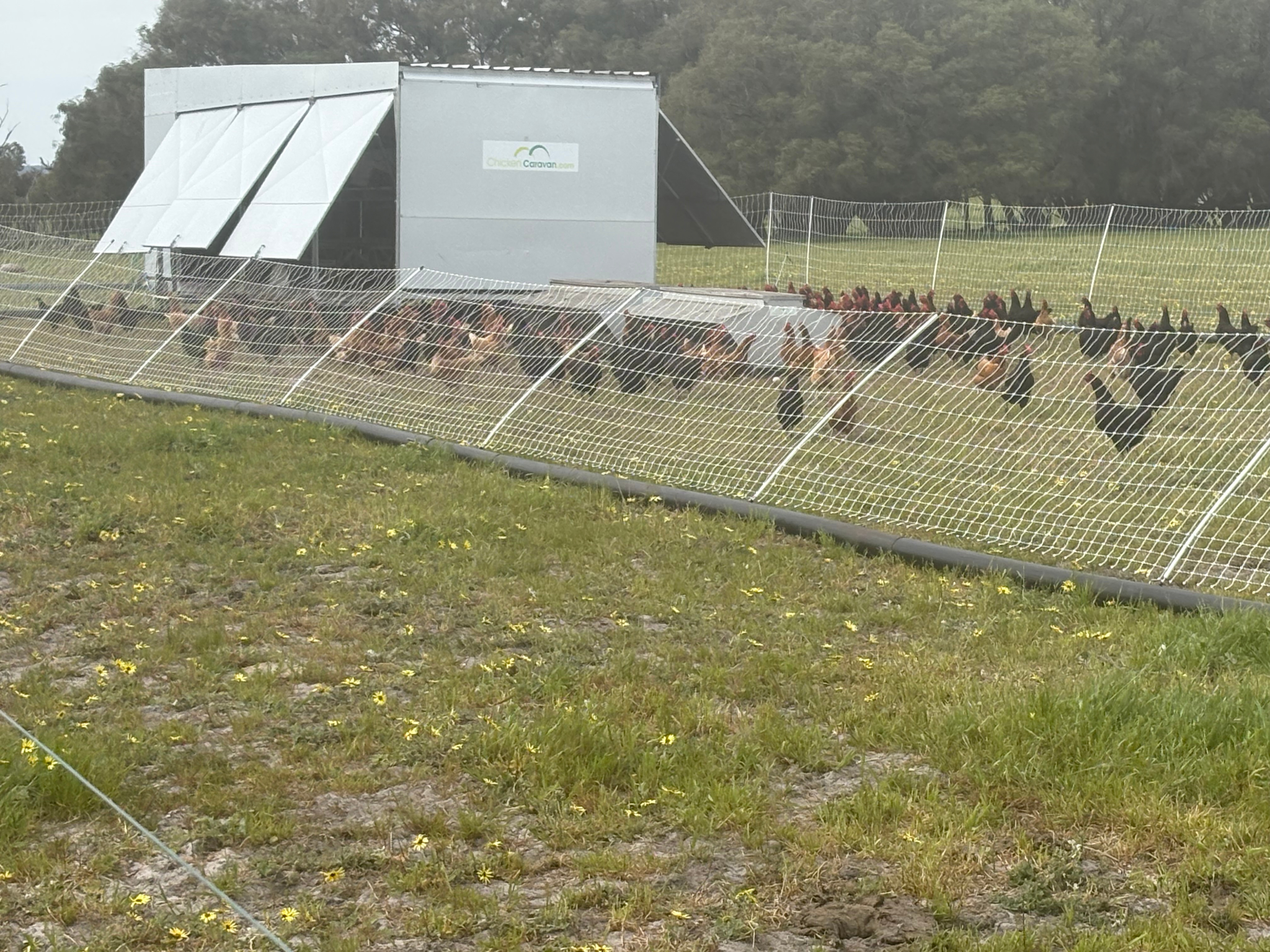
The change wasn’t just about grazing strategy. Youngest son Ewen introduced chickens into the rotation, moving them daily through the paddocks after the cattle. Their manure has supercharged pasture regrowth, with fresh feed reaching shin height within three weeks during the growing season.
Virtual Fencing: A Game Changer
The Nettleton family adopted eShepherd for their breeding cows. Upon initial fitting, reactions ranged from calm acceptance to brief bucking, but the animals quickly adapted. “There wasn’t any lengthy training,” Kevin says. “They just responded to the audio warnings. We haven’t had any cross the virtual fence.”
The system has allowed oldest son Campbell to manage grazing with precision. He uses virtual paddocks to rotate stock, protect wet areas, and funnel animals through laneways, all without lifting a single polywire. “It’s been a game changer for us,” Kevin says. “Our cows and calves have never done as well as they have since we’ve had eShepherd.”
Low-Stress Calving and Monitoring
Calving takes place from March to June, initially in physical paddocks under close supervision. Once calves are on the ground, the Nettleton’s transition the herd to virtual paddocks. The system lets them monitor cow behavior remotely—often from the comfort of home.
“You could be lying in bed, turn on the app, and see a cow off on her own,” Kevin says. “Most of the time, she’s calving or has just calved. It’s a very easy way to check without having to be there all the time.”
As calves grow, they begin grazing further from their mothers. Kevin recently spotted a group of 14 calves happily grazing 150 metres away, while their mothers rested nearby.
Smart Movement and Leadership in the Herd
Kevin’s cows are very relaxed and expert at responding to virtual paddock changes. “We just change the fences and they move accordingly,” he says. “We’ve got a cow called T16—she’s an ultimate leader. She knows when the fence has been shifted and brings the rest of the mob with her.”
Kevin and his sons are also using virtual laneways to guide cattle to yards for vet work or mustering. “Previously, you’d spend frustrating time on a quad trying to get them in,” he says. “Now, it’s easy. Once they’re used to it, they don’t go where they’re not supposed to.”
Reliable Tech, Even in Tough Conditions
Despite operating in a low-lying area with variable weather, Kevin hasn’t had issues with battery life or connectivity. “We’ve just been changed over to 5G. We get one bar and have no issues,” he says. Even in wet seasons, the system helps him exclude waterlogged areas and protect soil structure.
Looking Ahead
Kevin’s experience is a testament to how virtual fencing can support regenerative farming, improve animal welfare, and simplify day-to-day management. “It just makes management so much easier,” he says. “It’s fabulous.”
Why eShepherd Works for the Nettleton’s
- Precision grazing across mixed soil types and leased land
- Improved cow and calf condition through rotational grazing
- Seamless integration with regenerative practices, including poultry
- Reduced stress and labour during calving and mustering
For Kevin, eShepherd isn’t just a tool—it’s a transformational shift in how he manages his stud. His story shows what’s possible when smart technology meets thoughtful stewardship in Western Australia.
Gallagher Animal Management is alerting U.S. ranchers to an important new tax opportunity that could significantly reduce the cost of installing agricultural fencing. Recent updates to federal tax rules now allow qualifying fencing used in agricultural production to be fully expensed in the year it is placed in service.
For ranchers who have been considering upgrades or expansions, this development makes it an ideal time to invest in fencing systems designed to stand up to real ranch conditions.
Under these updated guidelines, which have been endorsed by the National Cattlemen’s Beef Association (NCBA), ranchers may be able to claim full expensing through Section 179 or take advantage of 100% bonus depreciation. Both provisions are designed to give agricultural businesses more flexibility in managing capital investments. For fencing used directly in livestock management or crop protection, this can translate into meaningful savings and faster financial return. Ranchers should review their situation with a tax professional to determine which option best fits their operation.
Gallagher fencing systems, known for strength, reliability, and long-term performancefit naturally into this opportunity. With the ability to fully expense qualifying fencing, ranchers can renew their infrastructure, establish new grazing areas, or replace aging systems with confidence and reduced upfront financial pressure.
Not all fencing qualifies under the federal rules, and eligibility depends on how the fencing is used. Systems intended for livestock containment, pasture management, or crop protection generally meet the criteria, while ornamental or non-agricultural fencing may not. Because each operation is different, Gallagher encourages ranchers to consult their tax advisor for guidance tailored to their property and business.
For those who would like to review the provisions directly, details can be found on the IRS website.
Gallagher has supported generations of ranchers with solutions that help them work safely, efficiently, and with peace of mind. This new tax advantage offers yet another reason for producers to invest in fencing built to last and backed by a global leader in animal management.
Built for distance. Powered by daylight.
The S120 Lithium is Gallagher’s most powerful Lithium powered solar energizer, delivering 1.2 Joules of adaptive energy through market-leading solar technology. Whether you're managing livestock, nurturing pastures, or protecting remote boundaries, the S120 Lithium empowers you with reliable, off-grid performance built for nature’s rhythm.
Lightweight, rugged, and ready to move, the S120 is designed for rotational managed grazing, ecological stewardship, and serious off-grid wildlife defense. It powers up to 35 miles of fencing, with intelligent energy control that adapts to sunlight and battery levels, ensuring your fence stays hot - even in tough conditions.
Gallagher's S400 Solar energizer is a fully portable and built to power up to 60 miles / 280 acres of clean fence and boasts several solar technology improvements like multiple power options, that make it ideal for both livestock inclusion and wildlife exclusion. The S400 will continue to work up to 2 weeks without the sun.
The S400 has a 360 degree mounting capability, making it easy to mount onto a post that is already part of the fence line, no matter what direction the post is facing. Easily face your S400 towards the sun.
Gallagher's S200 Solar energizer is a fully portable and built to power up to 45 miles / 160 acres of clean fence and boasts several solar technology improvements like multiple power options, that make it ideal for both livestock inclusion and wildlife exclusion. The S200 will continue to work up to 1 week without the sun.
The S200 has a 360 degree mounting capability, making it easy to mount onto a post that is already part of the fence line, no matter what direction the post is facing. Easily face your S200 towards the sun.
Harvesting the power of light to keep your livestock where they are meant to be.
A compact, portable and super reliable fence energizer that is beautifully designed with farmers in mind. An internal lithium battery, smart electronics and robust construction come together to provide you with unparalleled performance. With built-in earthing and state of the art solar technology, we’ve taken portable electric fencing to a new level.
The fence they couldn’t beat. Keep pets in, and pests out.
The S6 Lithium Solar Energizer is a compact, portable and reliable solution for long lasting, self-sufficient protection for your garden and pets.
An electric fence provides a safe and effective barrier to deter pests from entering your garden or pets from exiting your property.
- Safe and effective garden and pet protection
- Easy to install and maintain
- Long lasting power, 24/7